
Finding Mount Lebanon Residents by Record
Mount Lebanon records work best when the first search is narrow. Use an address when the question concerns a parcel, a known party name when the question concerns a recorded instrument, and an era when the goal is family history. The County Real Estate Portal is address and parcel-number based. The Division of Real Estate index is built for grantor, grantee, subdivision, document, and date clues. Court, vital, library, and archive routes answer different questions. A deed party or tax-mailing recipient is not automatically a current resident.
Begin by writing down the exact spelling, address form, date range, and source of each clue. In Mount Lebanon, the property result can yield a parcel identifier, which can then guide a map and recorded-land search. Older research may need a predecessor-township name, a plan name, or a legal description rather than a modern street label. A second source should agree on the person’s role, place, and time before a result is treated as a solid match.
- Enter a known Mount Lebanon address in the County Real Estate Portal and retain the parcel identifier.
- Use the parcel position in the County GIS viewer to understand the location and adjoining parcels.
- Search the Official Record Search by grantor, grantee, subdivision, document number, or recording period.
- For a past person or address, check the appropriate regional directory volume, yearbook, map, or archive collection.
- When a defined municipal record is not online, request the existing record from its custodian with an address and limited date range.
Mount Lebanon Residents Records Offices
Mount Lebanon is an Allegheny County municipality, so property and land research begins with county offices in Pittsburgh. The Recorder, assessment office, GIS office, and elections office each hold a different part of the local record trail. The municipal Inspection Office creates address-specific permit and inspection material, while the municipal Right-to-Know Officer routes requests for existing municipal records. For a detailed address chain, use the Mount Lebanon street directory after identifying the parcel.
Division of Real Estate
County Office Building, Room 101
436 Grant Street, Pittsburgh, PA 15219
412-350-4636, option 2
Allegheny Property Assessments
County property and assessment records
Allegheny County, Pennsylvania
Address and parcel search
Allegheny County Elections
County Office Building, Room 312
542 Forbes Avenue, Pittsburgh, PA 15219
412-350-4500
Mount Lebanon Address and Parcel Trail
The public County Real Estate Portal exposes two starting modes: address and parcel number. Address entry uses a house number, street name without a suffix, and an optional municipality. A street name alone can return choices, and Mount Lebanon can be selected when a street needs to be distinguished. The screen does not offer an owner-name field. That limit matters because a name-first search belongs in the land index or another appropriate record, not in a guessed property query.
Parcel records keep three address concepts separate: the physical property location, the owner mailing address used for assessment notices, and the tax mailing address, which can differ when taxes are escrowed. Those administrative addresses help interpret the record, but they do not prove who is present at a Mount Lebanon dwelling. The GIS viewer then adds address search, parcel display, layers, measurement, printing, and sharing to the location trail.
- Parcel
- A County assessment unit for a property, not a household.
- Situs address
- The physical location of the parcel.
- Index
- A finding tool that points to recorded material; it is not the record image itself.
- Legal description
- Land-identifying language such as a lot, block, plan, or subdivision reference.
Note: A parcel match is a location clue, so preserve its number before moving to a map, deed index, plan, or county copy channel.
Mount Lebanon Land Index Searches
The Allegheny Official Record Search provides a public quick search for a grantor or grantee, subdivision, document type, or document number, plus a recorded-date range. Its Index Only and Index & Full Text choices work differently: the index searches multiword entries as separate words, while the OCR option treats a multiword search as a phrase. The advanced route adds separate grantor and grantee fields, book and page, document number range, OCR phrase, and a 14-to-17 digit parcel ID without dashes.
| Official land-search field | How it works | Mount Lebanon use |
|---|---|---|
| Search Term | Grantor/grantee, subdivision, document type, or document number | Start with a party, plan, or known instrument clue. |
| Recorded Date | Start and end boxes or short preset windows | Limit a search around a known transfer period. |
| Search Scope | Index Only or Index & Full Text OCR | Use OCR cautiously for a phrase in document text. |
| Historic category | Deeds, plans, historical plats, block and lot sheets, property cards, and more | Follow an older Mount Lebanon legal-description clue. |
The official land-record search screen shows the public search choices used for a Mount Lebanon residents directory land trail.
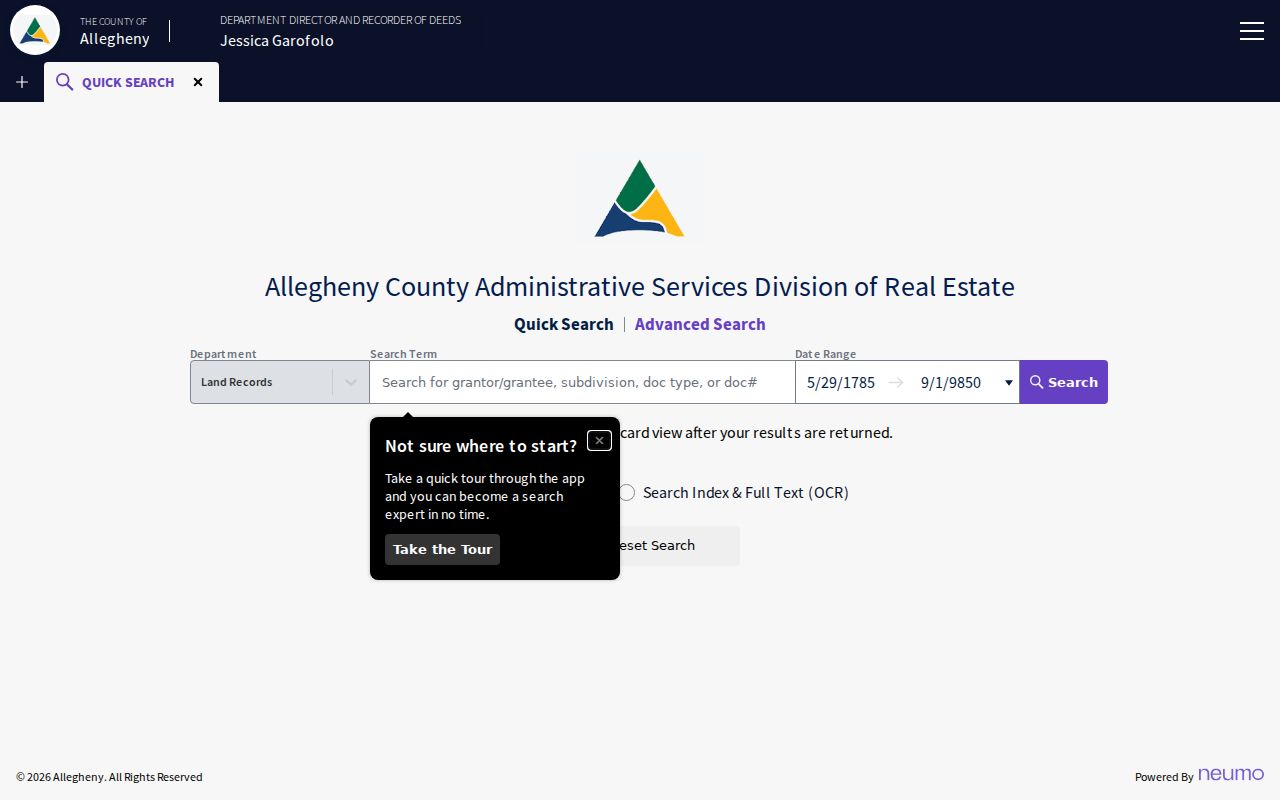
When the portal cannot reach the needed period, the County historical-record route and State Archives guide are the proper fallback. The Archives confirms Allegheny deed-book holdings for 1788 through 1871, while the web portal does not publish one universal online start date.
Mount Lebanon Resident Directory Sources
No single current Mount Lebanon resident directory is an occupant census. The useful sources each identify a limited relationship: a parcel and its administrative addresses, parties to a recorded instrument, an individual’s registration status, a court-docket clue, or a historical cohort. The table separates what the source can confirm from what it cannot. It is safer than treating an owner name, a voter-status result, or a court hit as a household list.
| Mount Lebanon source | Recorded connection | Custodian | Access and limit |
|---|---|---|---|
| Assessment parcel record | Parcel location and owner/tax mailing fields | Allegheny Property Assessments | Address or parcel portal; not household membership. |
| Recorded land instrument | Grantor, grantee, date, and legal-description clues | Division of Real Estate | Public index, copy/account route, counter, mail, and historical channels. |
| Voter registration status | Individual registration confirmation | Pennsylvania and Allegheny Elections | Individual check, county office, or state telephone help; not a street roster. |
| Public court docket | Party, court, date, and docket clues | Pennsylvania UJS | Free public docket sheets with exclusions. |
| Yearbook or regional directory | Historical name or address lead | Library, Historic Pittsburgh, and archives | Check the image and each volume’s geographic scope. |
Records that name a person must be read in context. A deed shows documentary parties, not every person at a location. A voter-status tool is for individual confirmation. A public court docket does not establish present residence, and protected or nonpublic records remain unavailable.
Mount Lebanon Court and Voter Limits
For a name connected to Mount Lebanon, the Pennsylvania Unified Judicial System Case Search is the public docket-sheet route. A participant search can be narrowed with the smallest useful fields, including last name, first name, and Allegheny County when it is known. The portal also supports docket, citation, filing-date, parcel, and other criteria. Its public results are leads that should be checked against party role, date, and an independent property, probate, directory, or archive source.
Pennsylvania’s voter service is different. The state directs an individual to its registration-status form, the county elections office, or 1-877-VOTESPA. It is not a public display of every registered voter on a Mount Lebanon street, and it never shows ballot choices. A non-match can reflect a name or address change, a move, protected status, eligibility, or a query mismatch.
Note: Juvenile, sealed, expunged, limited-access, and other excluded court matters do not become available by adding more search terms.
Mount Lebanon RTKL Record Requests
When a defined municipal record is not searchable online, Pennsylvania’s Right-to-Know Law provides a request process for existing agency records. It does not require an agency to research a person, create an address history, or disclose material protected by an exemption, privilege, court order, or confidentiality law. A workable Mount Lebanon request identifies the record, agency, address or other identifier, date range, and preferred format. The Commonwealth’s normal response baseline is five business days, with a written interim response available under stated conditions.
Mount Lebanon names Michelle Rizzo as its Right-to-Know Officer. The municipal route accepts a request by mail to 710 Washington Road, Pittsburgh, PA 15228-2018, by fax at 412-343-3753, or by email at RTK@mtlebanon.org. The municipal form asks for a specific record and can be used for existing permit, inspection, or other defined material. A counter visit, library reference request, Historical Society access inquiry, and State Archives finding aid are separate fallback channels.
The Pennsylvania Right-to-Know request form shows the standard written route for a focused Mount Lebanon records request.
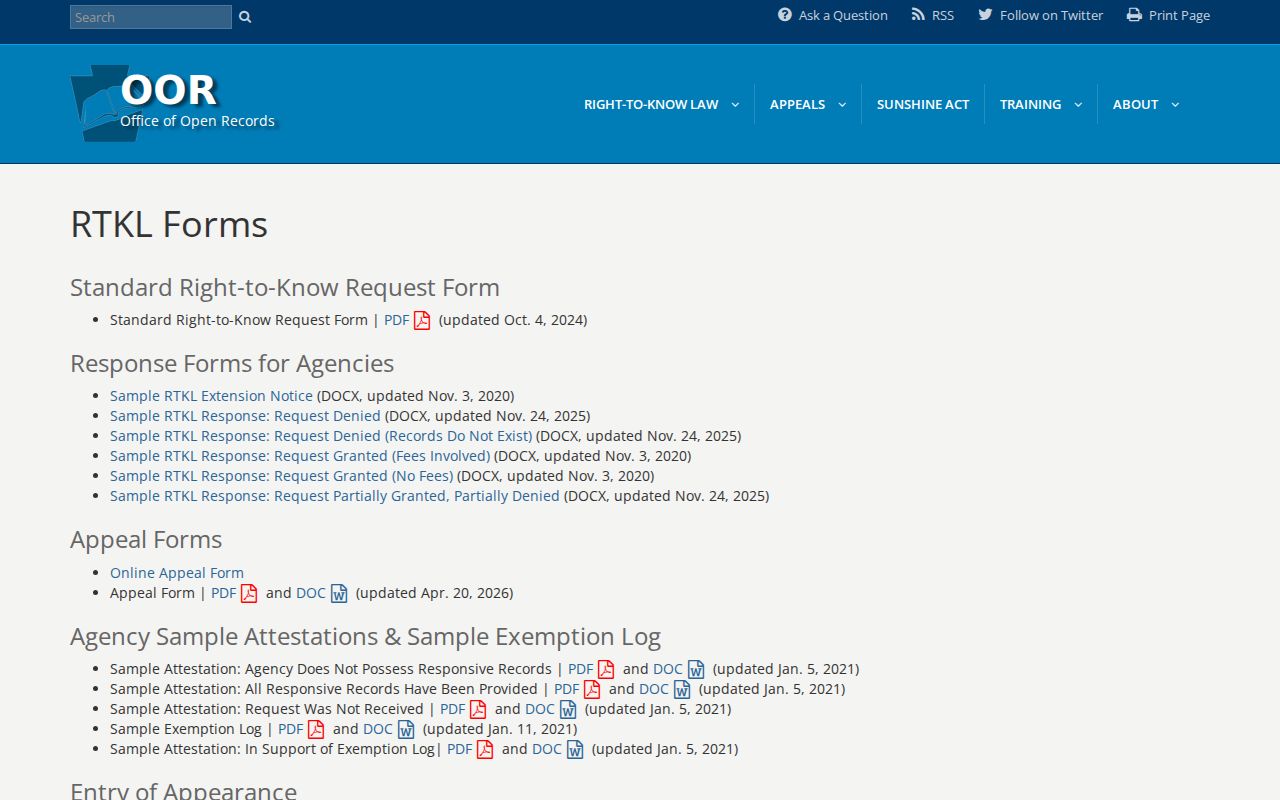
A targeted request for an existing address-specific record is more likely to reach the proper custodian than a broad request for all information about a person.
The Commonwealth’s Right-to-Know Law guidance explains the statewide response and extension framework that applies to the request process.
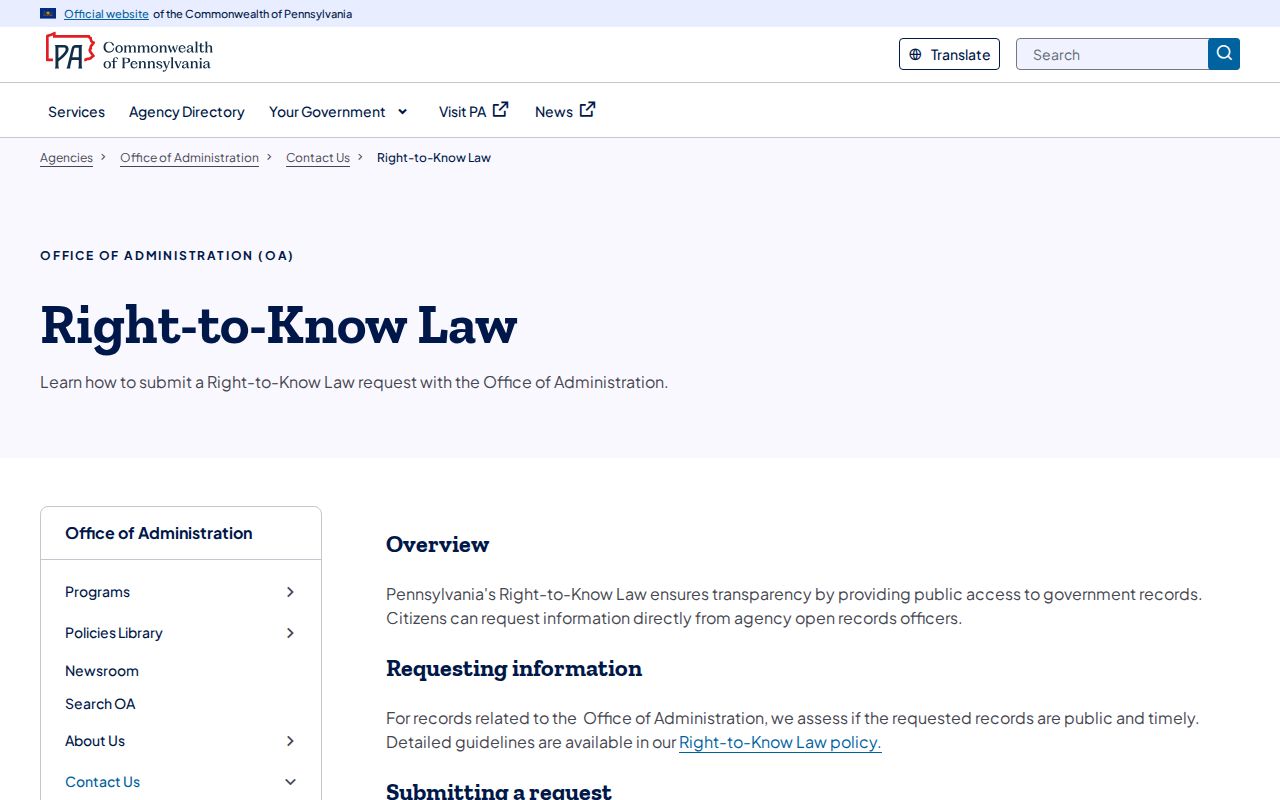
Use the current Office of Open Records fee schedule rather than relying on an older local policy when copying or request costs matter.
Historical Mount Lebanon Resident Directories
Historical research begins with geography. Mount Lebanon became a separate township in 1912, and earlier material can appear under St. Clair, Upper St. Clair, Scott Township, Pittsburgh, a rural-delivery area, a church, or a subdivision. Historic Pittsburgh’s digitized directory collection describes titles from 1815 through 1945, with directories from 1837 through 1930 available online with gaps. Each year and volume must be checked to see whether it reaches the relevant South Hills area.
The Mount Lebanon High School Yearbook Archive adds a local source with searchable OCR PDFs. Its visible run is 1931 through 2012, while a broader library page describes 1931 to present, so a live check is sensible. OCR can miss or misread a name, and the scanned page should be inspected. The full historical collections trail, including Carnegie Library microfilm and the History Center access route, is covered in the Mount Lebanon city directories.
Mount Lebanon Before Township Formation
Mount Lebanon’s local history changes how names and parcels are searched. The area belonged to St. Clair, Upper St. Clair, and Scott Townships before the separate township was created on February 6, 1912. The first Mt. Lebanon Plan was laid out in 1901, Clearview followed in 1902, and 11 subdivisions had been approved by 1905. These are useful search pivots when a modern street label does not appear in an early deed, map, or directory.
Municipal material says local permit recording began in 1924 and reports 2,164 permits by the end of that decade. A plan name, lot and block, or legal description can bridge an older record to a newer parcel more reliably than an assumed street match. Washington Road itself had earlier names, including Coal Hill Road and Upper St. Clair Turnpike before the Washington Road name in 1870.
Mount Lebanon Archive and Library Leads
Mount Lebanon Public Library is a useful local research stop for its yearbook archive, reference help, digital-history links, and free public Genealogy Society meetings. The library lists regular public hours and can help identify the right regional collection when a directory, obituary, map, or microfilm run was not verified online. HeritageQuest is available remotely to library cardholders, while Ancestry Library access is in-library only.
The Historical Society of Mount Lebanon offers a separate local-context route at its History Center on Washington Road. Its posted access arrangement includes appointments and collection access by application, not a public searchable member directory. Historic Pittsburgh’s FAQ points researchers toward the Detre Library & Archives and Carnegie Library of Pittsburgh’s Pennsylvania Department for city-directory help, especially after digitized coverage stops.
Mount Lebanon Public Record Boundaries
Public records have real limits. Pennsylvania’s Address Confidentiality Program allows eligible participants to use a substitute address, and a public-record request cannot override a protected-address rule, a confidentiality statute, a privilege, or a court order. Allegheny court policy also restricts private identifiers and various family, medical, juvenile, adoption, dependency, mental-health, and sealed matters. A missing field or search result can be the correct outcome.
The Pennsylvania inmate and parolee locator is a state custody-status tool, not a Mount Lebanon residents directory or proof of a current home address.
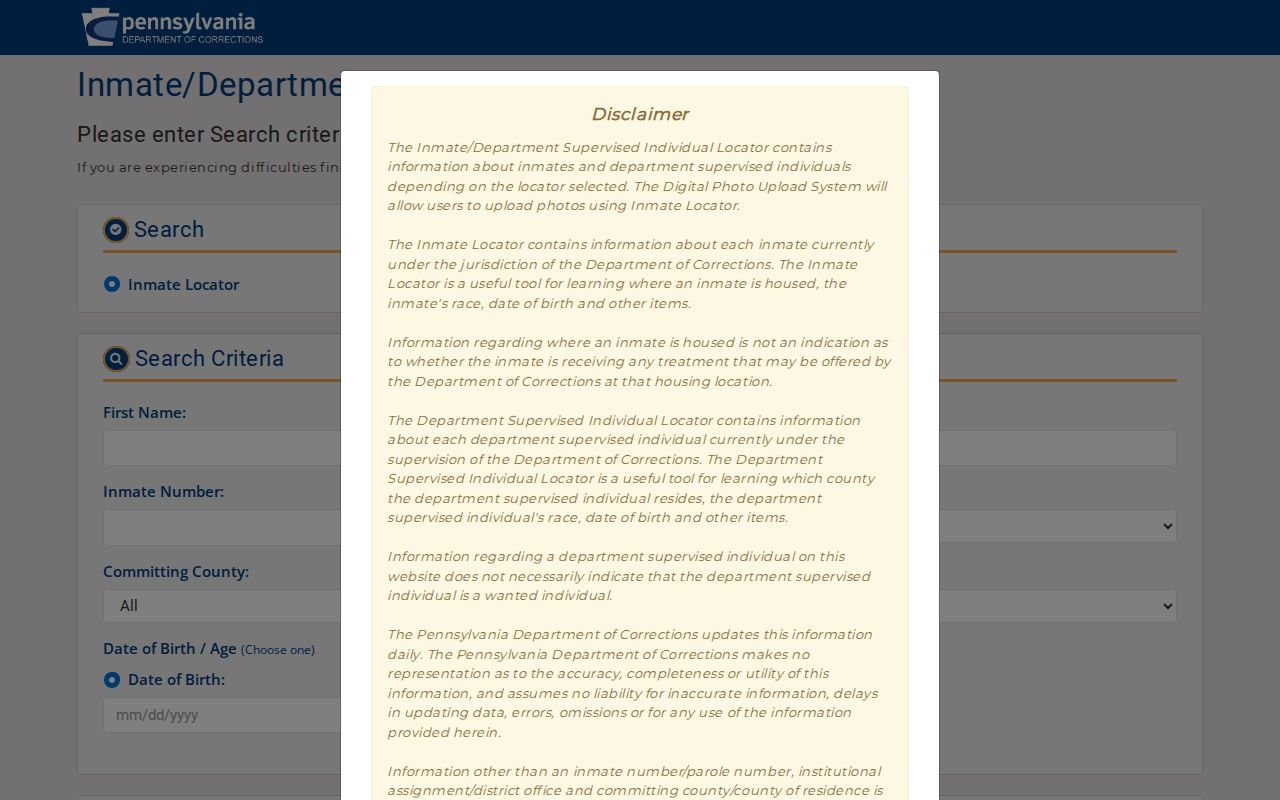
The locator’s scope excludes county-facility custody and out-of-state placements, and its own conditions should control how an individual result is read.
The Pennsylvania State Police registry is a statutory public-safety service with its own terms and accuracy limits, not a general Mount Lebanon address search.
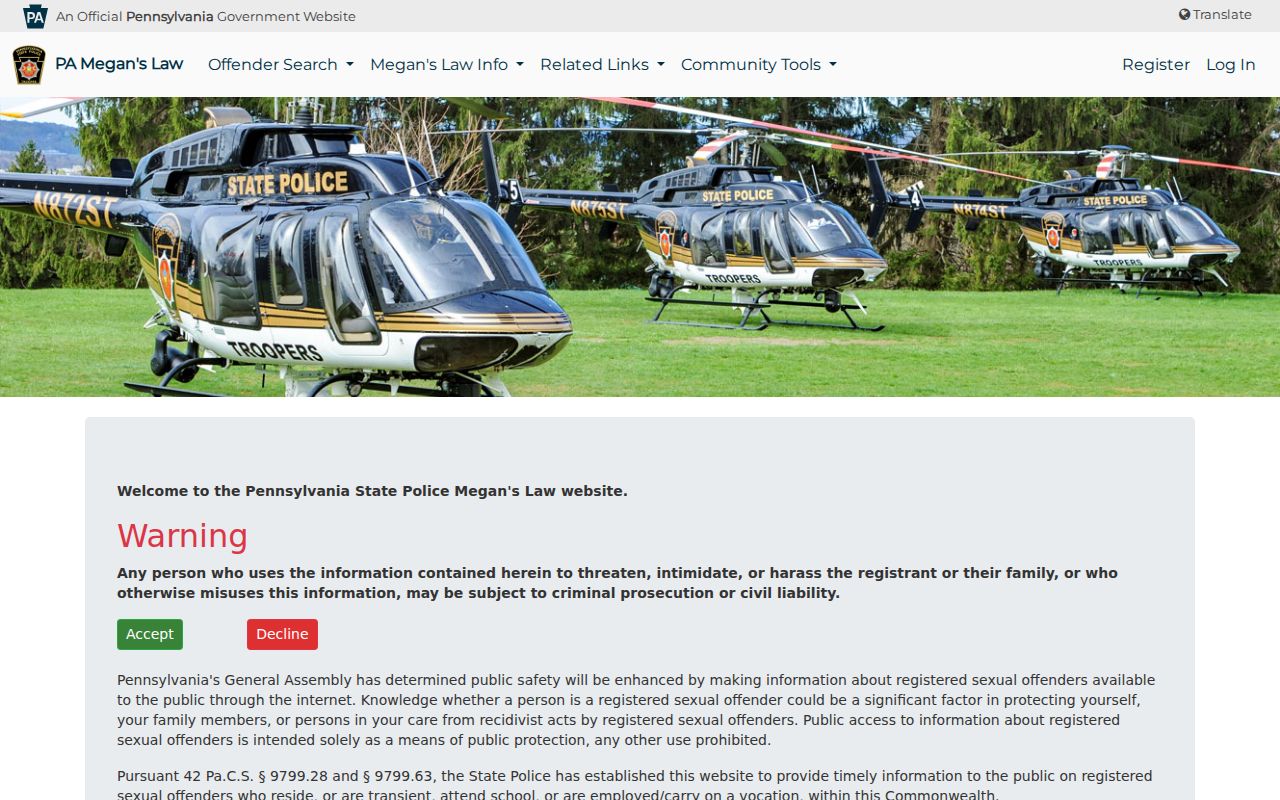
Threats, intimidation, and harassment connected to a registry result can have legal consequences. Fingerprint comparison, not a name match, is the stated positive-identification method.
Mount Lebanon Official Record Checks
Official sources and compiled people-search products serve different purposes. A custodian can explain an assessment address, recorded-document procedure, court copy request, election-registration issue, or vital-record amendment. A compiled product may be incomplete, stale, or attached to the wrong person, and changing a compiled entry does not correct a county or state record. For a Mount Lebanon result that matters, return to the office that created it and preserve the supporting document.
| Route | Best use | Important limit |
|---|---|---|
| Official county or state index | Locate the documented record or custodian | Each index covers only its own record type. |
| Counter, archive, or written request | Seek a defined existing record when web access is incomplete | Access rules, fees, and confidentiality still apply. |
| Compiled commercial category | Possible lead only | Not a substitute for custodial verification. |
The Allegheny Property Alert service is free monitoring by name, entity, keyword, or located instrument. It is an alert tool, not a proof of title or occupancy.
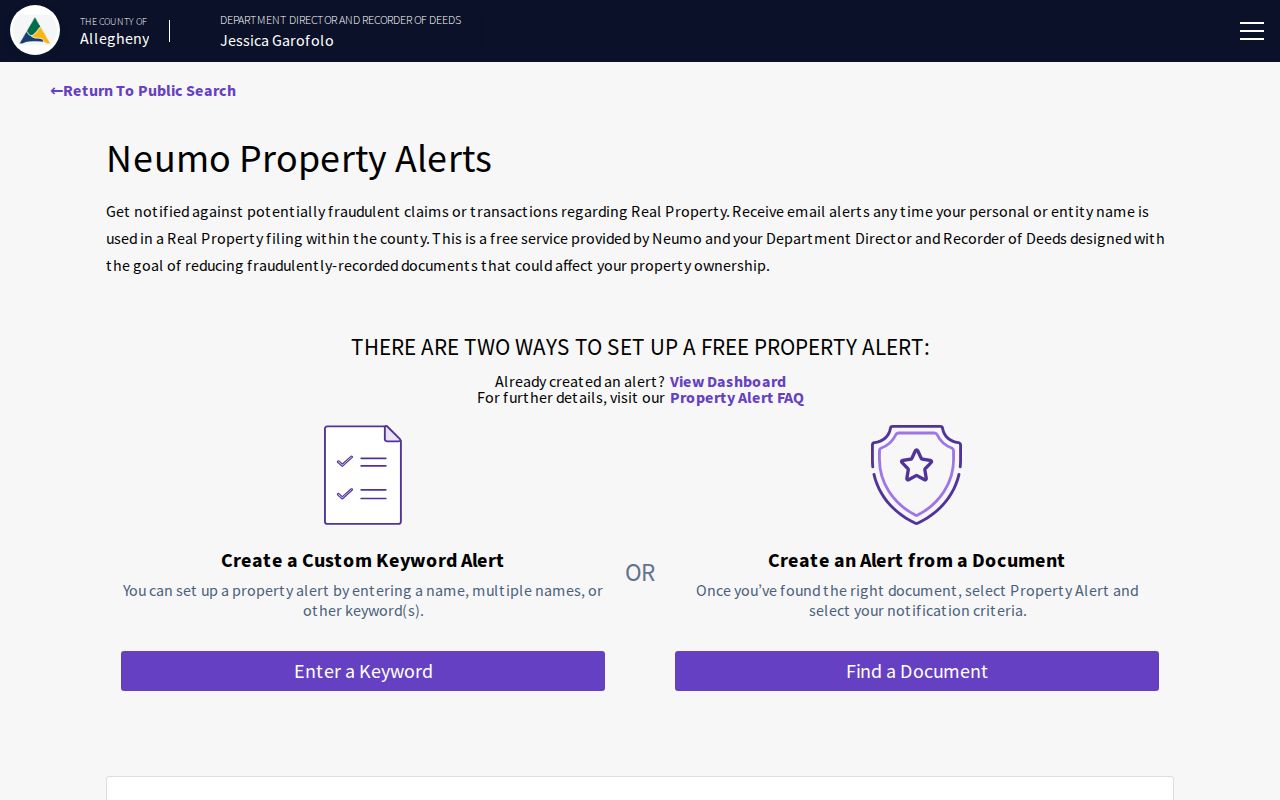
When an alert arrives, compare the instrument and parties through the official land-record and copy channels rather than relying on the alert alone.
The Pennsylvania unclaimed-property search is an official free name-search and claim route. A name match is a lead, because a claimant still must establish a right to the funds.
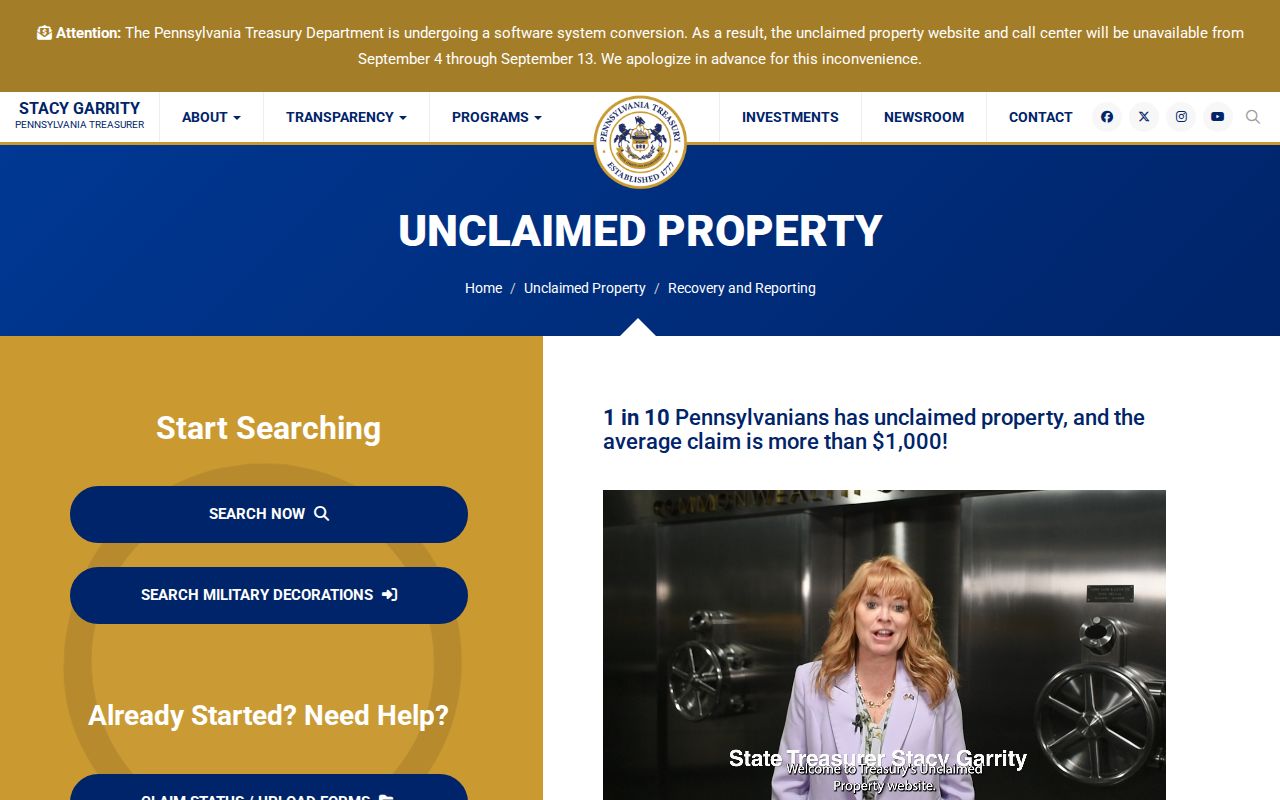
A claim does not establish a person’s current Mount Lebanon address, but it can be a reason to verify identity with the responsible state process.